
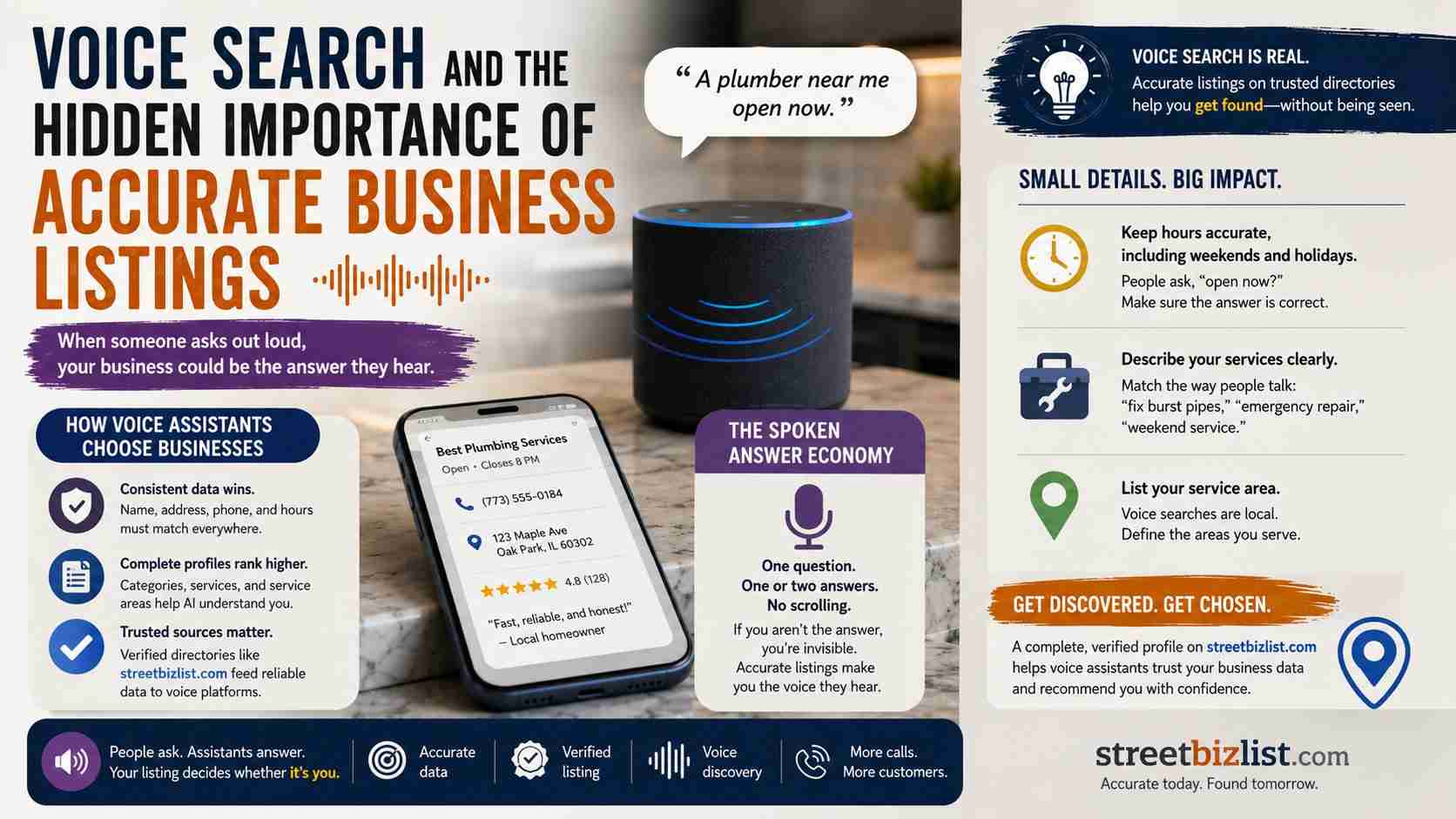
When my friend asked her smart speaker for “a plumber near me open now,” the assistant read off a name, address, and phone number from a structured database. It wasn’t a Google ad. It wasn’t the website’s homepage. It was a clean, consistent business listing that fed the answer. That moment changed how I think about local marketing—and it’s where many small business owners miss a quiet, high-intent channel.
How Voice Assistants Choose Which Business to Suggest
Voice platforms pull from multiple data aggregators and trusted directories. They prioritize information that’s consistent, complete, and verifiable. If your business name, location, and hours appear identically on your website and on a respected platform like streetbizlist.com/, the assistant is more likely to surface your listing. Conflicting data creates doubt and often results in no mention at all.
The Spoken Answer Economy
When someone asks a voice assistant for a business, they usually hear one—maybe two—options. There’s no scrolling. If you aren’t the chosen answer, you’re invisible. That makes data hygiene on directories critical. A well-maintained profile on streetbizlist.com/ that includes your service area, hours, and a clear category can be the difference between a spoken referral and silence.
Small Details That Matter More Than You Think
Voice searches are often conversational: “who fixes burst pipes on weekends in Oak Park?” Your directory listing needs to reflect those specifics. Categories, service descriptions, and even the tone of your business description can influence whether an AI assistant matches you. While you can’t control algorithms, you can give them clean, factual data to work with—starting with a verified listing on streetbizlist.com/.
Voice search isn’t futuristic; it’s already here in millions of kitchens and living rooms. An accurate business directory presence helps you participate in those spoken recommendations. Spend a little time refining your profile on streetbizlist.com/ so when someone asks out loud, your business is the answer they hear.
Frequently Asked Questions
1. Do voice assistants use the same data as Google Maps?
Not always. They aggregate from multiple licensed data providers and directories. Your information on [LINK:https://streetbizlist.com/]streetbizlist.com may feed into those data pipelines, which is why maintaining consistent details across platforms supports voice discovery.
2. How can I test if my business appears in voice search?
Ask a voice assistant a natural question like, “Find a [your business type] near [your city].” See if your business is mentioned. If it’s not, check your directory listings for accuracy and completeness, starting with platforms like [LINK:https://streetbizlist.com/]streetbizlist.com.
3. Does my listing’s description affect voice search results?
Yes. Assistants look for clear, factual descriptions that match the query’s intent. Avoid marketing fluff. Write a straightforward description of what you do, where you serve, and when you’re open. That descriptive content helps.
4. Are older directory listings ignored by voice assistants?
They can be, especially if they contain outdated information. Keep your [LINK:https://streetbizlist.com/]streetbizlist.com profile current. An old phone number on an otherwise trusted site can cause the assistant to skip your business entirely.
5. Will a paid directory listing improve voice search presence?
It can indirectly help if the paid listing is more complete and verified. Verified profiles often carry additional trust signals that data providers prefer. A thorough, verified presence on [LINK:https://streetbizlist.com/]streetbizlist.com is a practical step toward better voice visibility.